Ethena Review 2026: Complete Beginner's Guide: Earn 4-10% APY on Your Dollars with sUSDe + ENA Token Guide
Who this guide is for: Anyone who holds USDC, USDT, or other stablecoins and wants to earn meaningfully higher yield, 4-10% APY in current conditions, without relying on a bank, centralised exchange, or simple lending protocol. You do not need prior DeFi experience. If you have ever asked why your savings account pays 0.5% while large investors can access higher rates, Ethena's answer to that question is worth understanding.
We tested this on three real devices (screenshots throughout are taken live, not stock photos):
- Desktop, 1440px wide screen (Windows laptop / iMac)
- Tablet, iPad at 1024px
- Phone, iPhone 16 Pro Max at 430px
What Is Ethena? (Plain English)
Ethena is a DeFi protocol that creates USDe, a synthetic dollar, and allows holders to stake it as sUSDe to earn yield from cryptocurrency derivatives markets.
What is USDe? USDe is a synthetic dollar: it is designed to always be worth approximately $1, but it is not backed by US dollars in a bank account (like USDC or USDT). Instead, it is backed by a delta-neutral hedge, a combination of long staked Ethereum plus a short Ethereum perpetual futures position that cancels out price risk.
What is delta-neutral? When you hold both long ETH (price goes up = you profit) and short ETH futures (price goes up = you lose), the two positions offset each other. If ETH rises 10%, your long position gains 10% and your short position loses 10%, net change: approximately zero. Your dollar value stays stable. This is "delta-neutral."
Where does the yield come from? Two sources:
- Perpetual futures funding rates: When crypto prices are rising and most traders are long, short-position holders (like Ethena's hedge) receive regular payments from longs. These payments are called the funding rate, and they can be substantial during bull markets.
- ETH staking yield: The long side of the hedge is in staked ETH (which earns ~4% APY from Ethereum validator rewards).
The sum of these two income streams is distributed to sUSDe holders.
In plain terms: Ethena is like a bank that takes your dollar, immediately puts half into a savings account earning 4% APY and half into a trade that collects regular payments from other market participants. As long as those payments keep flowing, your balance grows. The bank shows you exactly what it is doing, all positions are published on Ethena's transparency dashboard.
Key facts (29 October 2026):
- Platform URL: https://ethena.fi
- Chain: Ethereum mainnet (100%), TON integration
- Total Value Locked (TVL): approximately $5.15 billion (USDe supply)
- ATH TVL: $14.98 billion (October 3, 2025)
- sUSDe current APY: approximately 4.69% (DefiLlama)
- Historical APY range: 4.72% to 35%+ (highest during peak bull markets)
- 30-day fees distributed: $22.03 million
- Annual fee run rate: ~$245 million
- ENA token price: approximately $0.20 (CoinGecko, Oct 2026)
- ENA circulating market cap: approximately $2.53 billion (#53)
- ENA total supply: 15 billion (13.4B circulating)
- ENA all-time high: $1.52 (April 11, 2024), currently 87.6% below ATH
- Fee switch: Activated Q1 2026, 10-20% of protocol revenue goes to sENA stakers
- $890M DAT buyback programme for ENA tokens
How Ethena Looks on Your Device
On a Laptop or Desktop Computer (1440px wide)
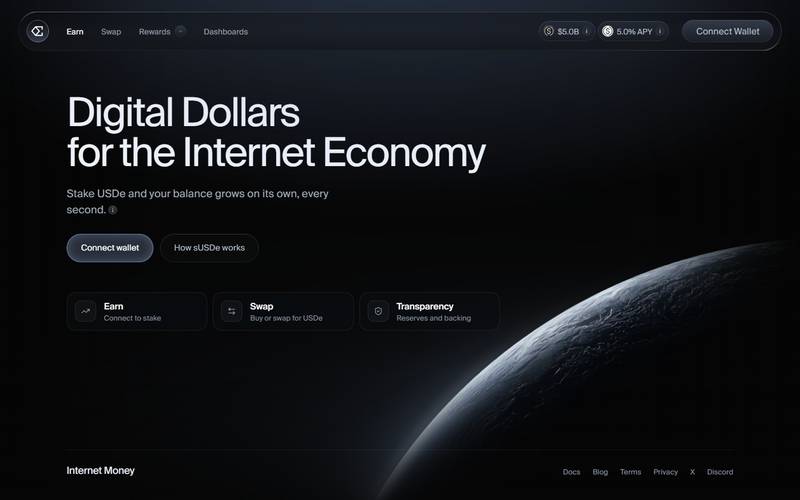
decoding="async" referrerpolicy="no-referrer" decoding="async" src="/wp-content/uploads/2026/10/articles-screenshots-ethena.fi-desktop.jpg" alt="Ethena Desktop Interface" title="">
The Ethena interface on a 1440px desktop screen, showing the USDe mint/redeem panel, sUSDe staking stats, current APY, and the ENA token page.
Best for: Minting USDe, staking for sUSDe, and monitoring your yield. The full transparency dashboard with collateral breakdown is most readable on desktop.
On a Tablet: iPad (1024px wide)
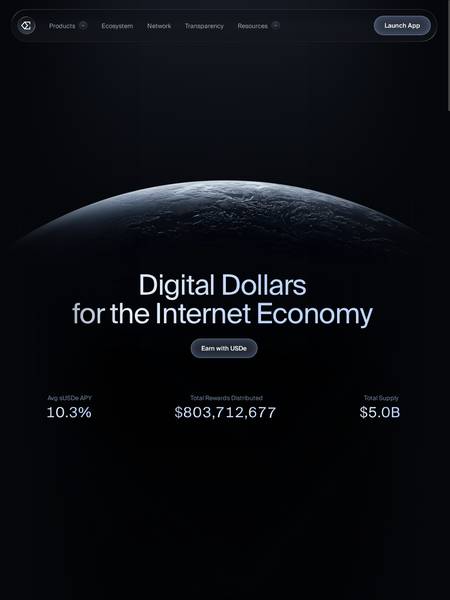
Ethena on an iPad at 1024px. The mint, stake, and portfolio sections are cleanly accessible.
Best for: Monitoring your sUSDe balance and yield rates on the go.
On a Phone: iPhone 16 Pro Max (430px wide)
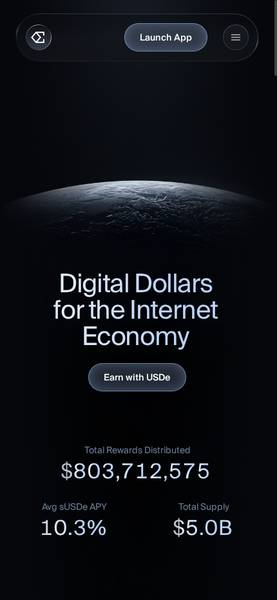
Ethena on an iPhone 16 Pro Max at 430px. Core staking and yield stats are accessible in a single-column layout.
Best for: Checking your yield and balance. For initial position setup, a desktop view gives a better picture of all the available products.
Core Products
USDe, The Synthetic Dollar
The base asset. Mint USDe by depositing USDC, USDT, ETH, stETH, or other supported assets. You receive USDe at a 1:1 rate (minus any small spread). USDe is designed to maintain a $1 peg but does not itself earn yield, it is the transferable, liquid form of the dollar position.
sUSDe, Staked USDe (Yield-Bearing)
The yield-earning version. Stake your USDe to receive sUSDe. The sUSDe/USDe exchange rate increases over time as protocol yield accrues, similar to how stETH/ETH works. Your sUSDe balance stays fixed; the value behind each sUSDe token grows.
Current APY: approximately 4.69% (variable, rises during bull markets with high funding rates, falls during bear markets or funding-rate flips).
USDtb, T-Bill Backed Stablecoin
Ethena's second stablecoin, backed by tokenized US Treasury Bills (via a partnership with Securitize). Lower yield than sUSDe but more traditional backing. Designed for institutional users and contexts where T-bill backing is specifically required.
tsUSDe, Institutional-Grade sUSDe
Formerly iUSDe. A compliance-wrapped version of sUSDe with custody integrations, KYC/AML wrappers, and institutional reporting. Designed for hedge funds, family offices, and regulated entities.
Ethena Pay
A crypto card product that allows spending USDe balances in the real world, with yield accruing while the card balance sits unused.
ENA Token and sENA
ENA is the governance token. Stake ENA to receive sENA, which entitles you to:
- 10-20% of all protocol revenue (fee switch activated Q1 2026)
- Voting rights on protocol parameters, collateral types, and upgrade decisions
How USDe Maintains Its Peg: The Delta-Neutral Mechanism
The peg stability is the most important thing to understand. Here is how it works in more detail:
When you deposit 1 ETH worth $2,500:
- Ethena accepts the ETH
- Ethena simultaneously opens a short position for 1 ETH on a perpetual DEX or CEX (Binance, Bybit, OKX, Deribit, Hyperliquid)
- You receive 2,500 USDe
- If ETH rises to $3,000: your long spot position gained $500, your short futures position lost $500, net change: zero. USDe value is still $2,500.
- If ETH falls to $2,000: your long lost $500, your short gained $500, still $2,500.
Where the yield comes from:
- Perpetual futures have funding rates, payments between longs and shorts every 8 hours
- When the funding rate is positive (longs pay shorts, which happens most of the time in bull markets), Ethena collects this as yield
- The ETH on the long side is staked (in stETH or similar), earning ~4% additional yield
The reserve fund: Ethena maintains a reserve fund equal to approximately 1.18% of TVL. If funding rates go negative (shorts pay longs, draining yield), the reserve fund supplements sUSDe yield to maintain positive returns.
How to Mint USDe and Stake for sUSDe (Step by Step)
What you need:
- A Web3 wallet (MetaMask, Coinbase Wallet, etc.) on Ethereum mainnet
- USDC, USDT, ETH, or stETH to deposit
- A small amount of ETH for gas fees
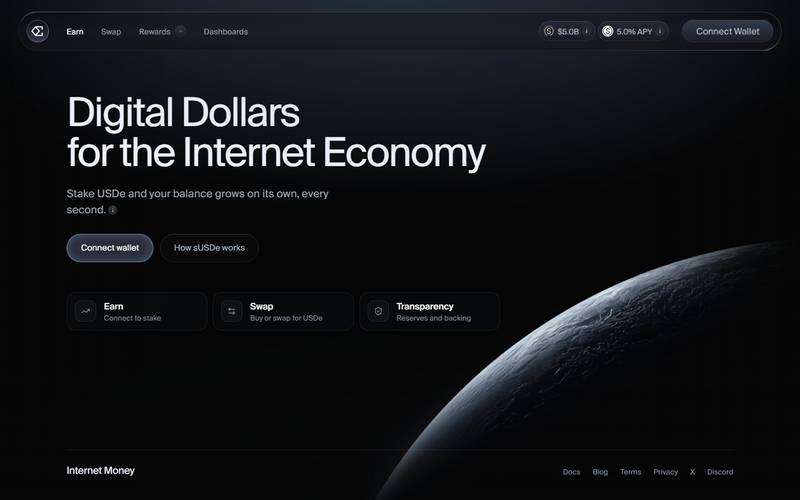
The Ethena app home, shows current sUSDe APY and your position summary.
Step 1, Go to Ethena and Connect Your Wallet
Go to https://ethena.fi. Click "Connect Wallet" and approve the connection. Make sure you are on Ethereum mainnet.
The Stake tab, enter the amount of USDe to convert to sUSDe.
Step 2, Mint USDe
Navigate to the "Mint" section. Choose the asset you want to deposit (USDC is simplest). Enter the amount. The interface shows how much USDe you will receive (typically 1:1 with a small spread for USDC). Click "Mint" and confirm in your wallet.
You now hold USDe. It does not earn yield on its own.
sUSDe begins earning yield immediately, the exchange rate increases over time.
Step 3, Stake USDe for sUSDe
Navigate to the "Stake" section. Enter the amount of USDe you want to stake. Click "Stake" and confirm in your wallet. You receive sUSDe at the current exchange rate. Your sUSDe balance stays fixed; the value grows as yield accrues.
To unstake: click Unstake, enter the sUSDe amount, and confirm, 7-day cooldown applies.
Step 4, Monitor Your Yield
The Ethena dashboard shows your sUSDe balance, the current APY, and your accumulated yield. The sUSDe/USDe exchange rate increases continuously, no manual claim needed.
After the cooldown, claim your USDe or roll back into sUSDe for compounding.
Step 5, Unstake When Ready
Navigate to "Unstake." Enter your sUSDe amount. Click "Unstake" and confirm. Your sUSDe converts back to USDe at the current (higher) exchange rate, you receive more USDe than you originally staked. A cooldown period may apply (typically 7 days) depending on protocol conditions.
ENA Tokenomics and Fee Switch
| Metric | Figure (October 2026) |
|---|---|
| Token ticker | ENA |
| Current price | ~$0.20 |
| Circulating market cap | ~$2.53B |
| Fully diluted valuation | ~$2.83B |
| Total supply | 15,000,000,000 ENA |
| Circulating supply | 13.4B ENA (89% of total) |
| All-time high | $1.52 (April 11, 2024) |
| Core contributors allocation | 30% |
| Ecosystem development | 28% |
| Investors | 25% |
| Foundation | 15% |
| Binance Launchpool | 2% |
| Fee switch activated | Q1 2026, 10-20% of revenue to sENA |
| DAT buyback programme | $890M committed |
| Annual fees generated | ~$245M |
Fee switch logic: With $245M in annual fees and 10-20% going to sENA holders, sENA stakers receive approximately $24M-$49M annually at current fee levels. Against a circulating market cap of $2.53B, that implies a 1-2% yield from fee distributions alone.
Major October 2026 unlock: On October 5, 2026, approximately 1.41 billion ENA tokens (investor/contributor allocations) were unlocked. This was one of the largest single token unlocks in 2026. ENA's price around this time was approximately $0.19-$0.21.
Referral Program
Ethena runs a referral programme through its Sats and Shards points campaigns. The specifics vary by campaign:
- Refer new users to earn bonus points multipliers on your own deposits
- Referral codes are shareable links that attribute new users to your account
- Points accumulate and may translate to future ENA distributions or other rewards
Check the current programme at https://ethena.fi for the most up-to-date referral mechanics.
Connecting Your Wallet (Live Screenshot)
We opened Ethena on 29 October 2026 and clicked "Connect Wallet" to test the connection flow live.
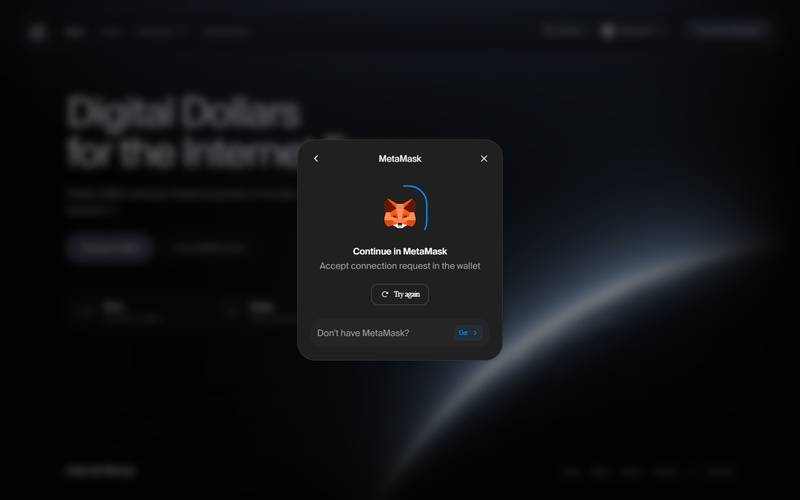
MetaMask connection request on Ethena to view sUSDe balance and staking position.
How to connect:
- Go to https://app.ethena.fi
- Click "Connect Wallet" (or "Connect" / "Sign In" depending on the site)
- Select MetaMask from the wallet picker
- In the MetaMask popup, click "Connect"
- Sign the message if prompted (confirms wallet ownership: no transaction authorised)
Once connected, the top-right corner shows your shortened wallet address and your balances appear in the interface.
Security: What You Need to Know
Ethena has been reviewed by multiple security firms. The protocol has operated at scale ($14.98B peak TVL) without a smart contract exploit.
Key risks:
- Funding rate flip risk: If perpetual futures funding rates go negative for an extended period (shorts pay longs), sUSDe yield drops, potentially to near-zero or negative. The reserve fund provides a buffer but cannot sustain indefinitely. This happened briefly in early 2025 during market corrections.
- Counterparty risk (centralised exchanges): Ethena's hedge positions are on Binance, Bybit, OKX, Deribit, and Hyperliquid. If any of these exchanges experiences a major failure, the hedge could be at risk. Ethena uses off-exchange custody providers (Copper, Ceffu) to reduce exchange custodial risk, but this does not eliminate it.
- Collateral risk: The long side holds stETH, liquid restaking tokens, and similar assets. A depeg or exploit in any of these collateral assets could affect USDe's value.
- Regulatory risk: USDe's yield mechanism (earning from short positions collecting funding rates) has attracted regulatory attention. Germany's BaFin issued regulatory actions, and the US GENIUS Act's March 2026 proposal raised concerns about yield-bearing stablecoins. Future regulatory restrictions could affect USDe availability in certain jurisdictions.
- ENA token dilution: Despite the $890M buyback, ENA has significant remaining supply (13.4B of 15B maximum are circulating). The token is 87.6% below its ATH.
Ethena vs Competitors
| Feature | Ethena (sUSDe) | USDS/sUSDS (Sky) | USDC supply (Aave) | USDT lending (Morpho) |
|---|---|---|---|---|
| Yield mechanism | Delta-neutral funding + ETH staking | DSR (MakerDAO savings rate) | Variable lending rate | Variable lending rate |
| Current APY | 4.69% | ~4-5% | ~3.8-5.2% | ~5-8% (curated vaults) |
| Peg backing | Delta-neutral crypto hedge | ETH/RWA CDP + RWA | None (USDC itself) | None (USDC itself) |
| Protocol fee capture | Yes (sENA) | Partial (MKR buyback) | No (AAVE indirect) | No (MORPHO none) |
| Smart contract risk | Ethena + CEX counterparty | MakerDAO | Aave | Morpho + curators |
| Regulatory status | Uncertain in EU (BaFin) | Established | Regulated underlying | Permissionless |
| Token buyback | $890M DAT programme | MKR buyback | None | None |
| TVL | $5.15B (USDe supply) | Billions | $17.77B | $11.41B |
Pros and Cons
Pros
- 4-10% APY on stablecoins, significantly better than most centralised or DeFi yield options at comparable safety levels
- $5.15B in active supply, one of the largest stablecoins in DeFi
- Complete transparency, all hedge positions and collateral published in real-time
- Fee switch active, sENA holders now receive protocol revenue
- $890M buyback programme creating consistent buy-side demand for ENA
- Multiple products (sUSDe, USDtb, Ethena Pay) for different risk profiles
- Institutional version (tsUSDe) with compliance wrappers for regulated capital
Cons
- ENA is 87.6% below ATH, token investors have suffered major losses
- Funding rate risk, sUSDe yield can drop significantly during bear markets
- CEX counterparty risk, depends on Binance, Bybit, OKX not failing
- Regulatory uncertainty, BaFin actions in Germany, potential EU restrictions
- TVL declined from $14.98B ATH to $5.15B, significant capital has exited
- ENA's fee switch yield (~1-2% at current fee levels) is modest
Verdict
Who Ethena is for:
- Stablecoin holders seeking 4-10% yield who understand the delta-neutral mechanism and its risks, sUSDe is genuinely competitive with most alternatives at similar risk levels.
- DeFi-native users who want to maximise yield on their dollar-equivalent holdings across multiple DeFi applications (sUSDe integrates with Aave, Pendle, Morpho, and others).
- ENA investors who believe Ethereum and DeFi bull market conditions will resume, sUSDe yield scales dramatically during high-funding-rate periods.
- Institutional users who need a compliance-wrapped synthetic dollar (tsUSDe) with traditional-finance-grade custody and reporting.
Who should look elsewhere:
- Users who want zero counterparty risk, USDe's reliance on centralised exchanges for hedging is a genuine risk that USDC/USDT holders do not face.
- Users in EU jurisdictions affected by BaFin regulatory actions.
- ENA token investors seeking a recovery, the token is 87.6% below ATH and recovery requires significant TVL growth and sustained high funding rates.
- Beginners who do not understand the funding rate mechanism, confusing sUSDe for a simple savings account can lead to unexpected outcomes when yields drop.
Rating: 4.0 / 5
Ethena's synthetic dollar model is genuinely innovative and has attracted institutional capital at scale. The sUSDe yield product works well in its current 4-5% range and outperforms most simple lending alternatives. The fee switch activation and $890M buyback programme demonstrate the team's commitment to ENA value accrual. The main concerns are the ENA token's deep drawdown from ATH, the CEX counterparty dependency that is inherent to the delta-neutral hedge, and the regulatory headwinds in Europe. For stablecoin yield specifically, sUSDe is one of the strongest options available today.
Quick Links
- Main platform: https://ethena.fi
- Transparency dashboard: https://ethena.fi/transparency
- Official documentation: https://docs.ethena.fi
- Protocol data (DefiLlama): https://defillama.com/protocol/ethena
- ENA token (CoinGecko): https://www.coingecko.com/en/coins/ethena
Last verified: October 29, 2026. Data sourced from DefiLlama, Eco.com, Tokenomics.com, CoinGecko, and Stablecoin Insider.